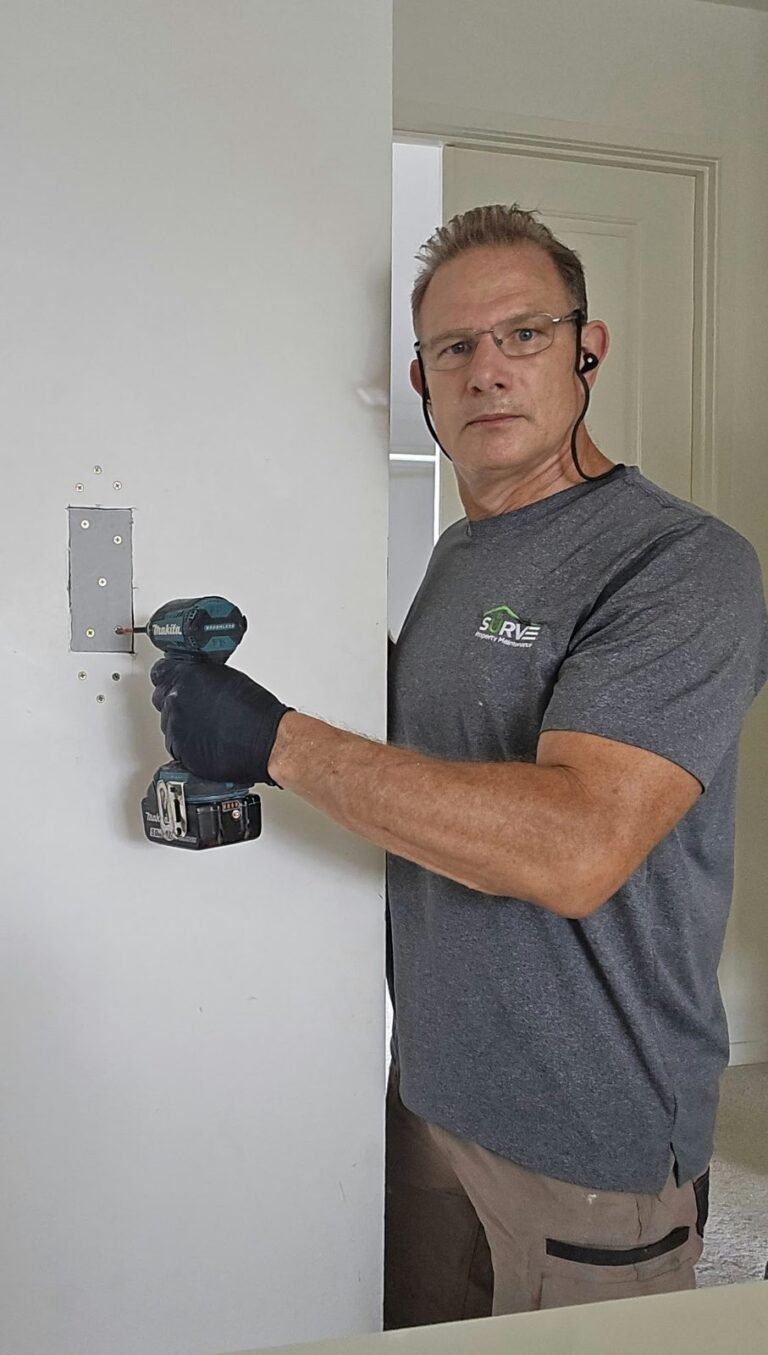
A door that sticks, won’t latch, has a hole in it or has swollen from moisture isn’t always a reason for a new one – but when replacement is the right call, the fitting is what makes the difference between a door that works for years and one that drags from day one.
Repair or replace?
Many doors can be repaired: hinges tightened or packed, the door planed so it stops rubbing, the latch and strike re-aligned, or a damaged jamb repaired. Replacement makes sense when the door is split, delaminating, badly water-damaged or has a hole that can’t be repaired neatly.
What a proper door replacement involves
- Measuring the opening – height, width and thickness, and checking the frame is square
- Fitting the door to the frame – trimming and planing so the gaps are even all round
- Hinges – housed (rebated) neatly so the door hangs flat and swings freely
- Handle and latch – bored and fitted so the door closes and latches cleanly
- Sealing and painting – all edges sealed, including the top and bottom, so the door doesn’t swell

When the frame needs work too
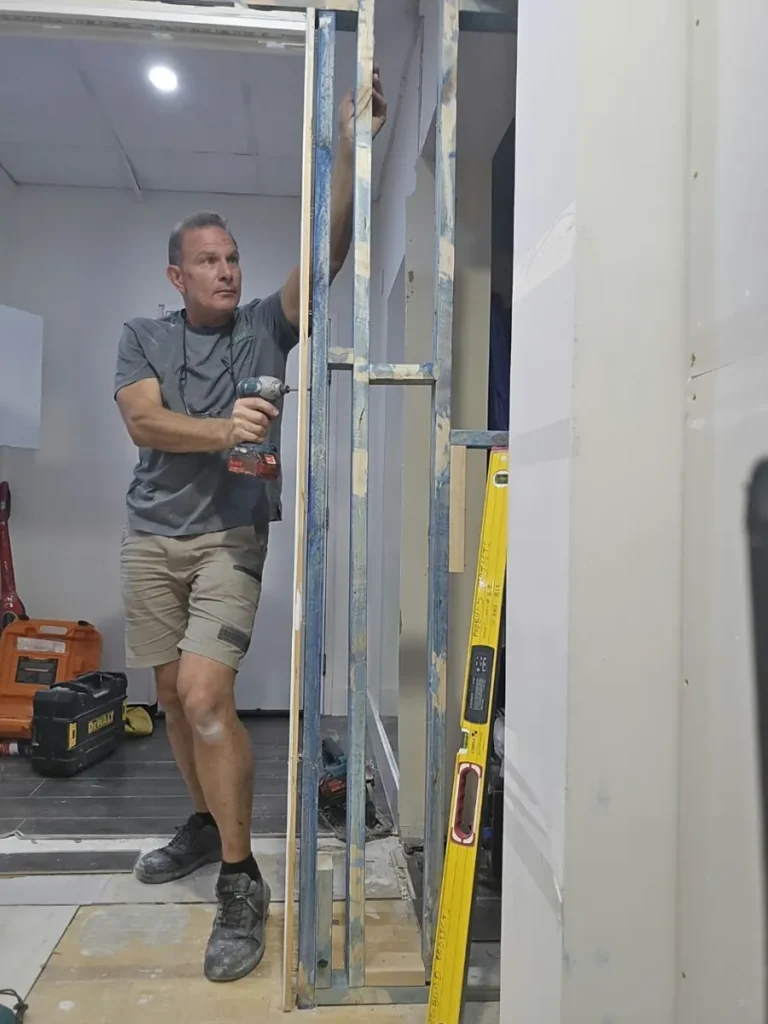
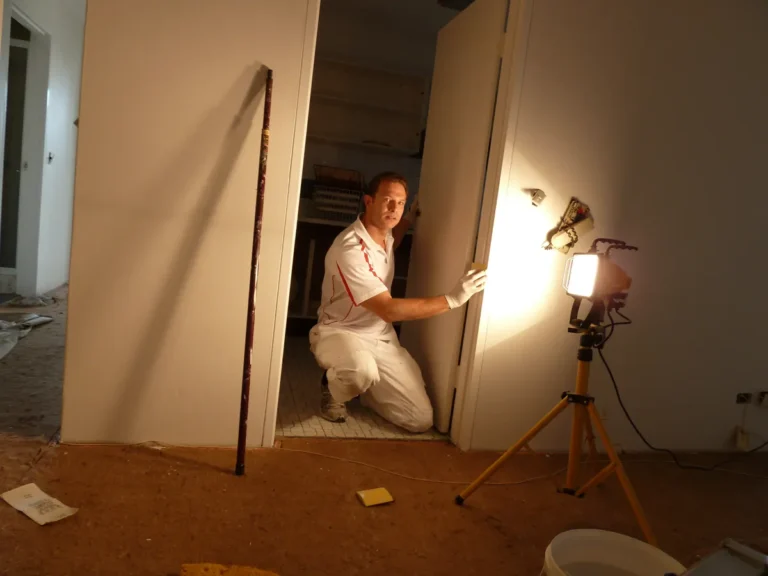
Rotted bottoms of external door frames are common, especially where water sits against the jamb. The damaged section can often be cut out and spliced, rather than replacing the whole frame. Where the frame is too far gone, a new frame is fitted, levelled and plumbed before the door goes in.
Barn doors and cavity sliders
Barn doors and cavity sliding doors save space, but they rely on their tracks and rollers. Getting the track level and the door adjusted is the key to a smooth, quiet slide.
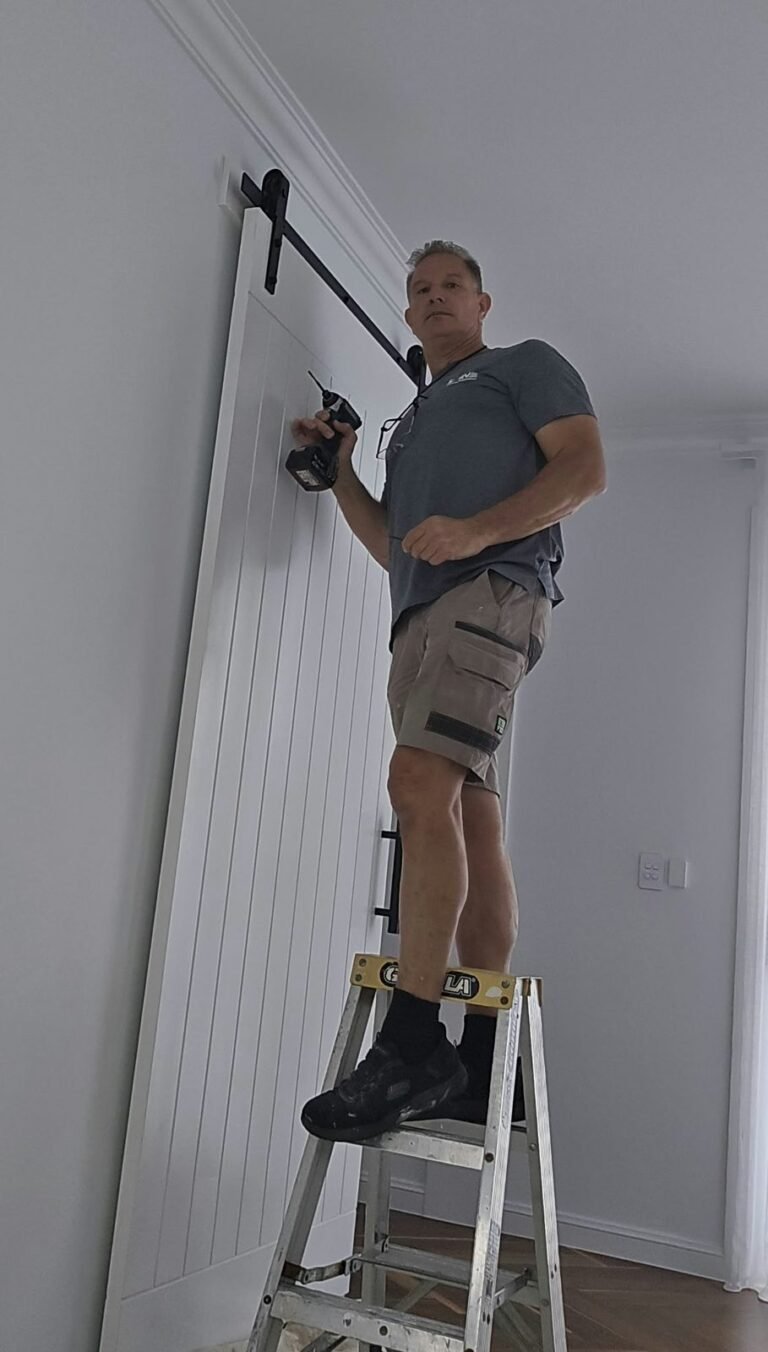

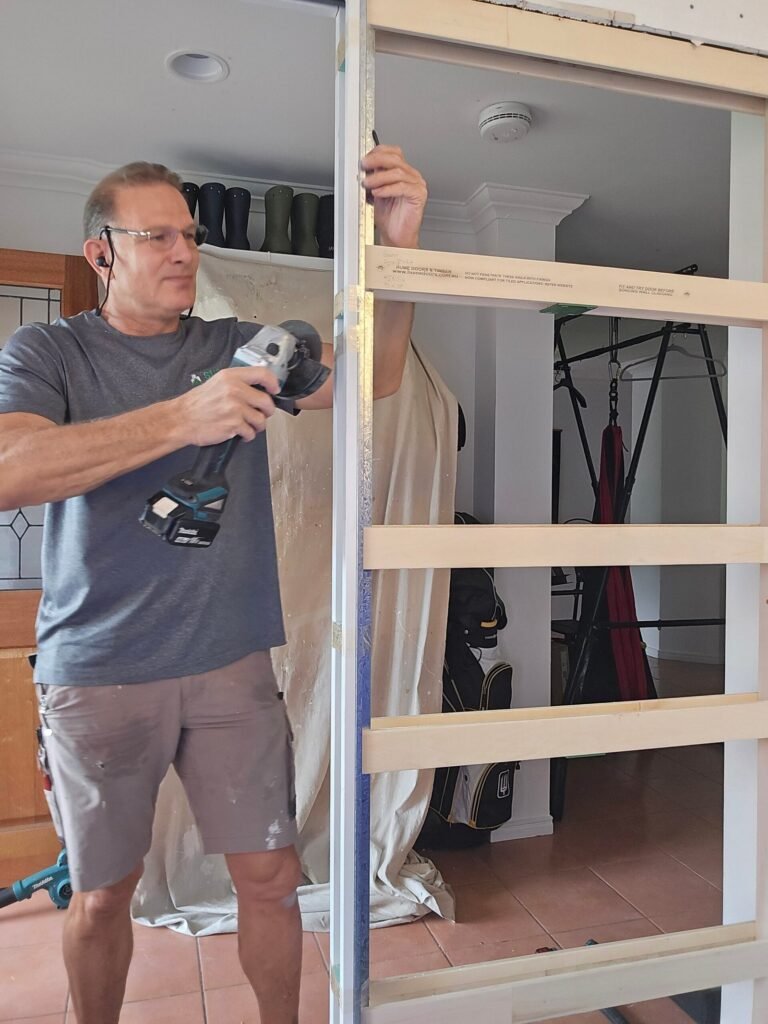
Recent examples: a barn door repair in Elanora, a rotted door frame repaired in Mudgeeraba, an internal door jamb repair in Bundall and a cavity sliding door installed in Merrimac. More about door repairs and carpentry on the Gold Coast.
Need a hand? I’m Dan, and I do every job myself. Call Sue on 0435 207 771, or request a free quote – photos help me quote faster.