
Door handles, furniture, a slip with the vacuum, a plumber who needed to get into the wall – holes in plasterboard (gyprock) happen in every house. The good news is that a hole can be repaired so you can’t see where it was. The bad news is that a quick fill with a tub of filler usually cracks, sinks or shows through the paint a few weeks later. Here’s what a proper plaster patch involves, step by step.
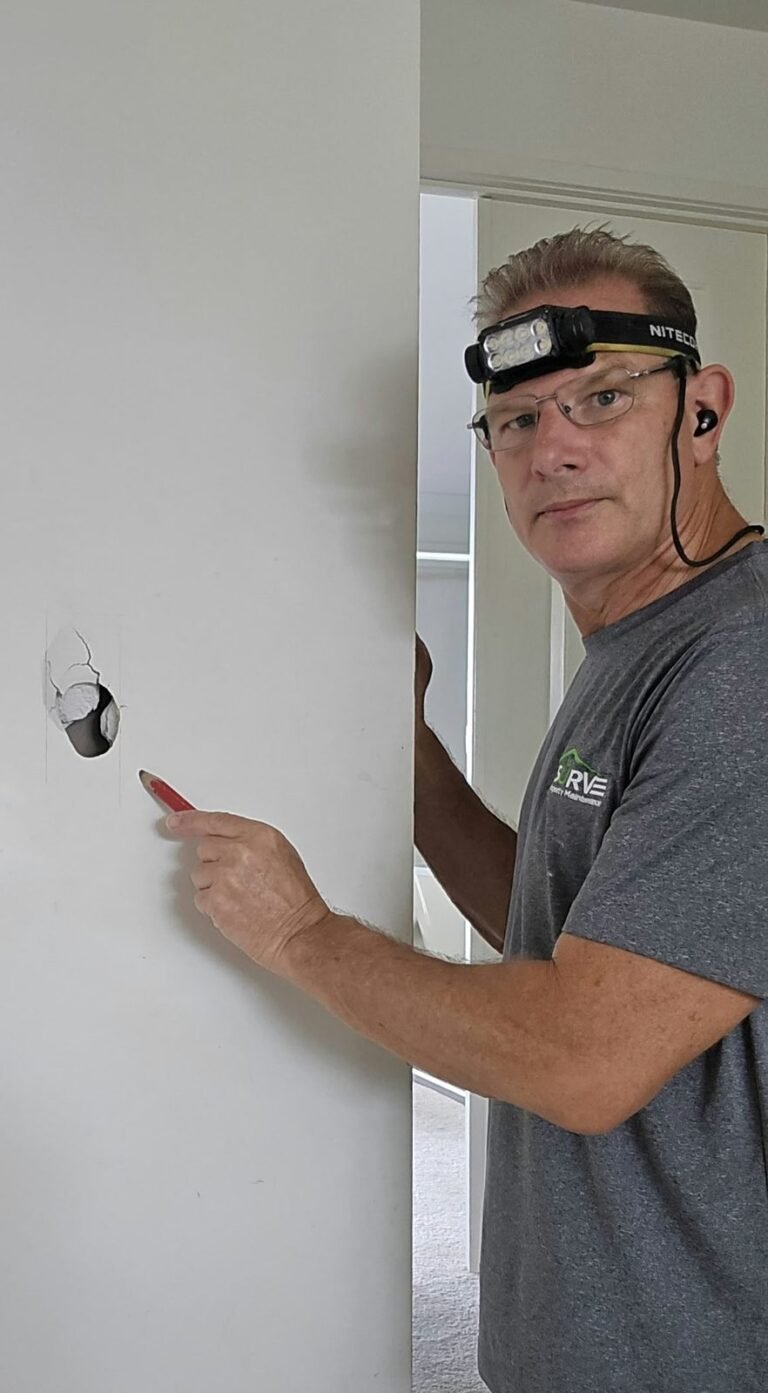
1. Mark out and cut back square
I mark a neat square or rectangle around the damage and cut back to solid board. A clean, square opening is much easier to patch than a ragged hole, and it gets rid of any loose or crumbled board around the edges.
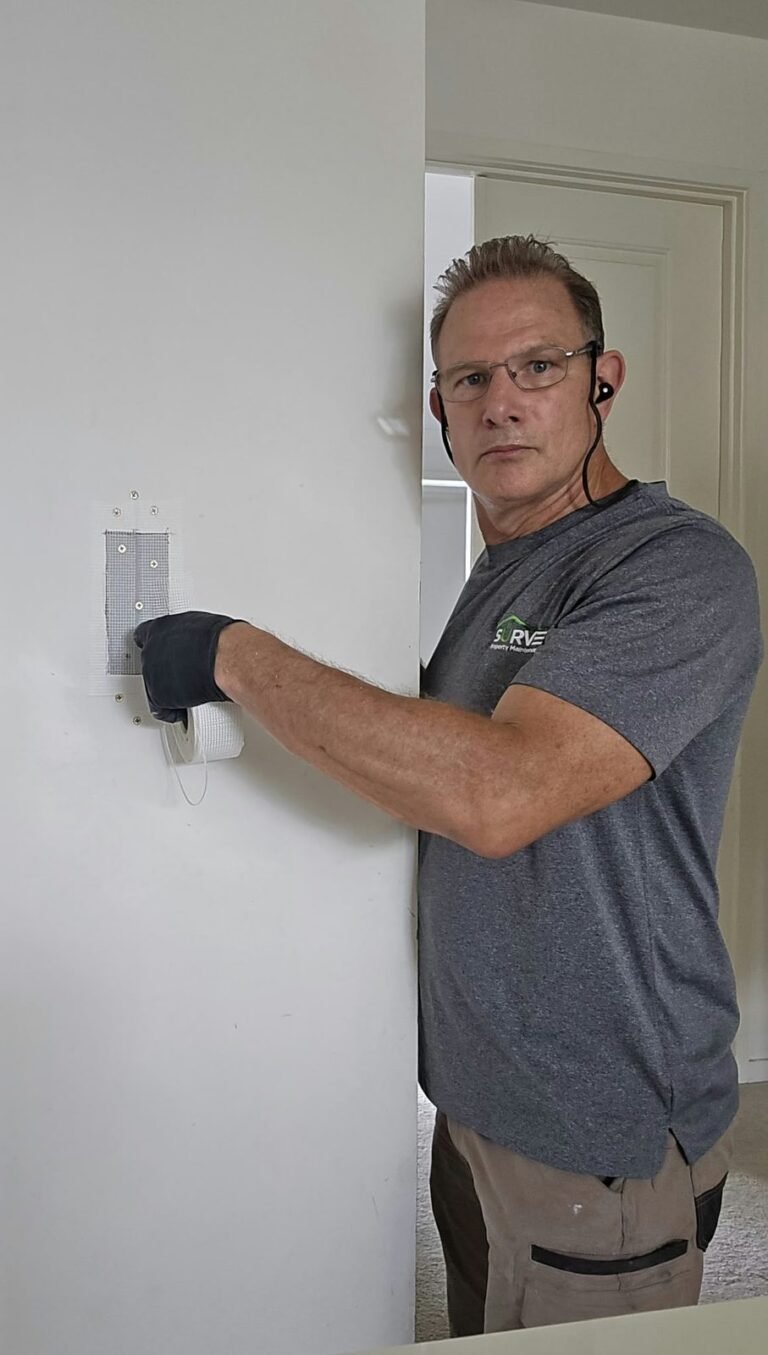
2. Fit backing inside the wall
The patch needs something solid to screw into. I fit timber or metal backing inside the opening, fixed to the back of the existing plasterboard. This is the step most quick repairs skip – and the reason so many of them crack or sink later.
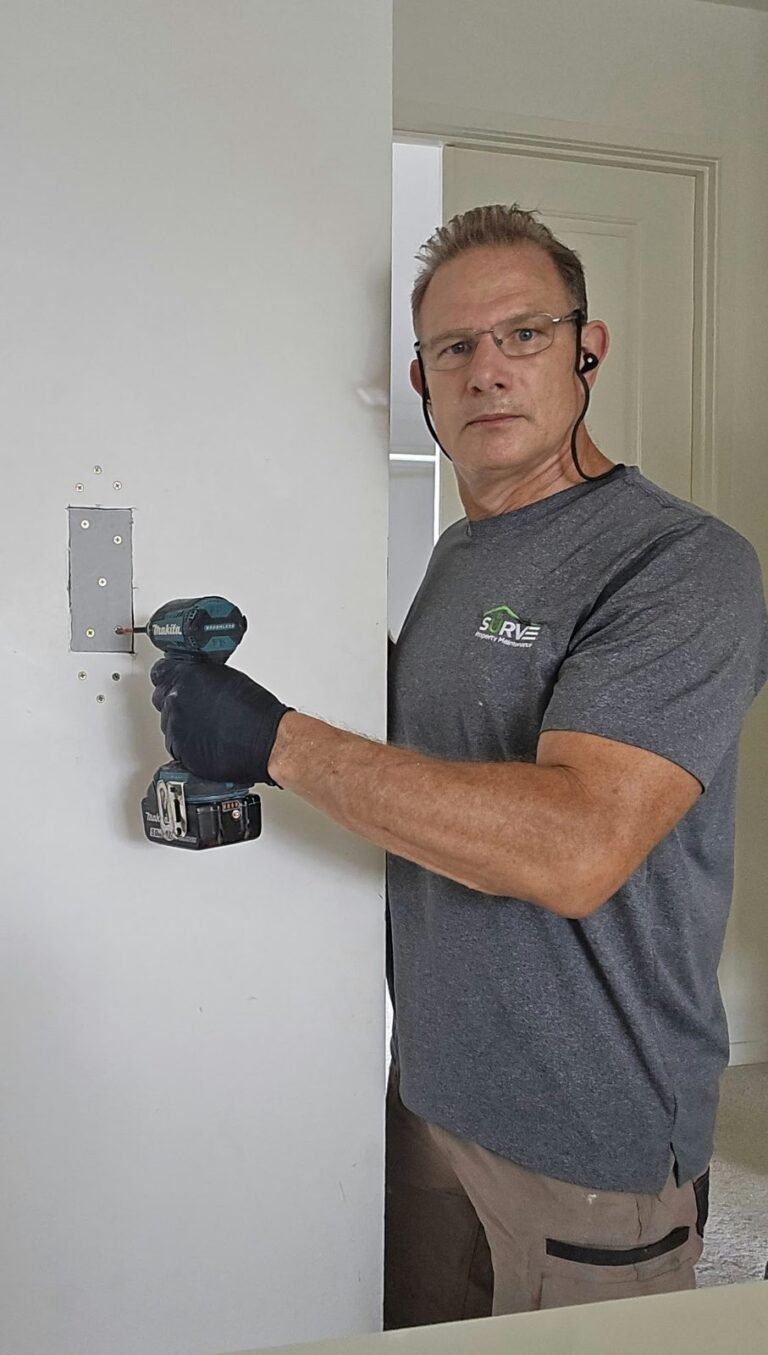
3. Screw in a new piece of plasterboard
A new piece of plasterboard is cut to fit the opening and screwed to the backing, with the screw heads set just below the surface so they can be covered.
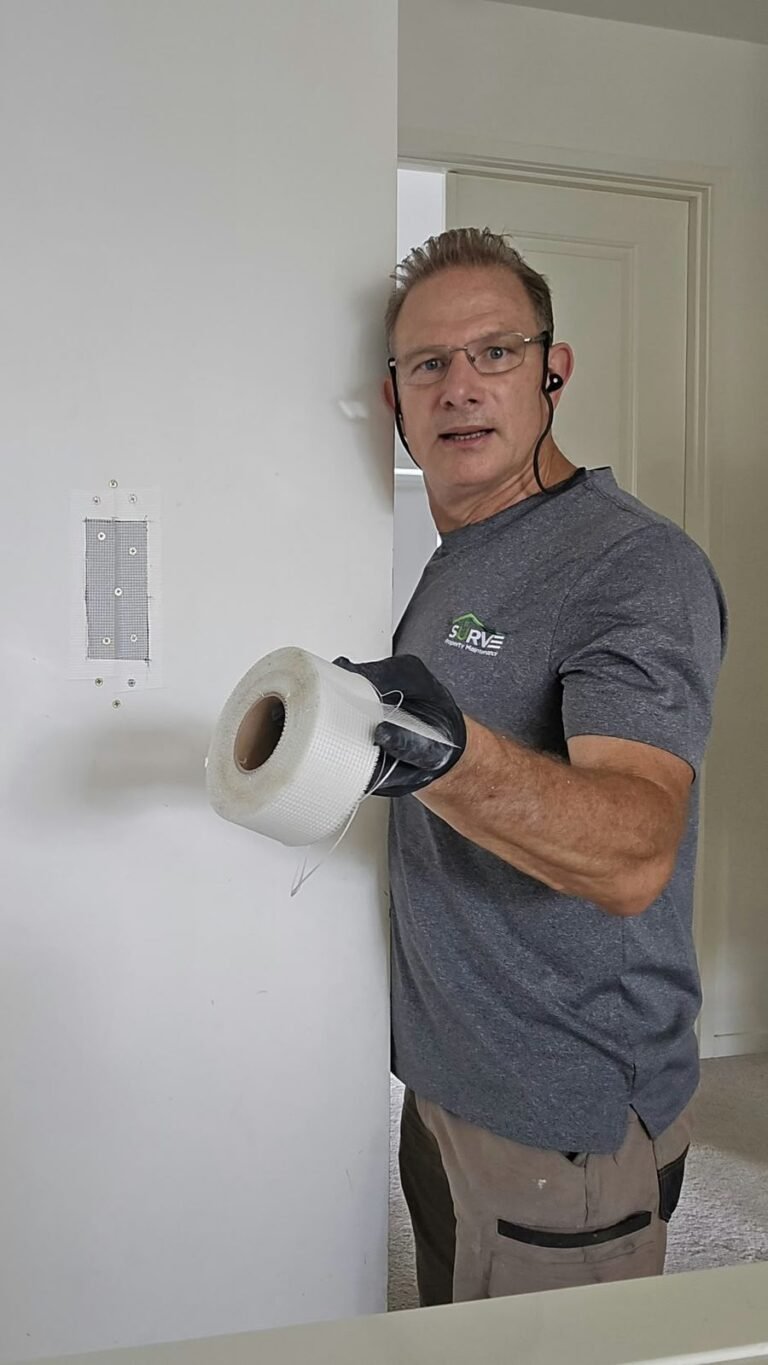
4. Tape the joints
The joints around the patch are taped with mesh or paper tape. The tape stops the joints cracking along the edges of the patch.
5. Set it in coats
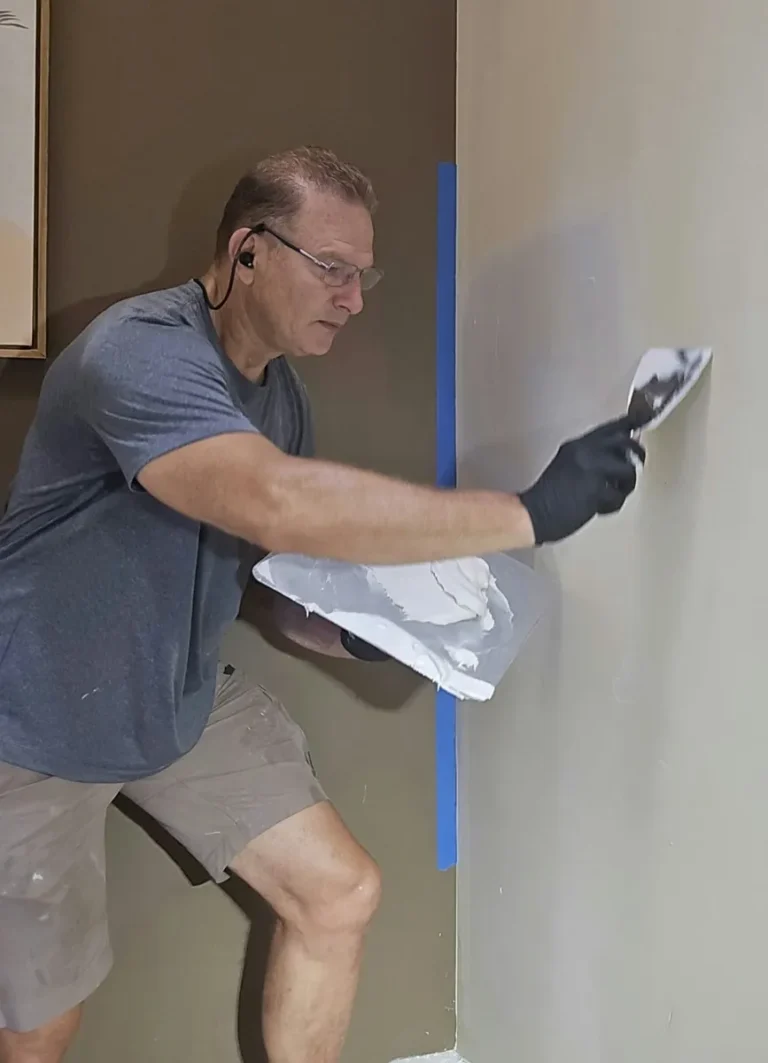
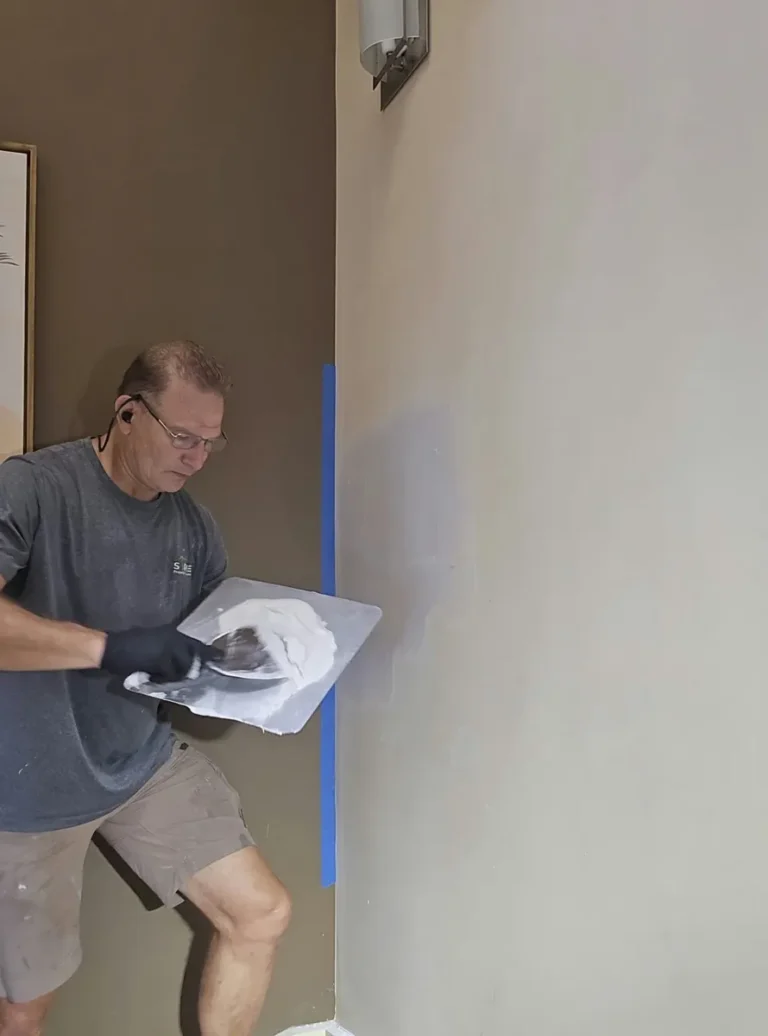
Plaster compound goes on in thin coats – a base coat, then one or two finish coats – feathered out wider each time so the patch blends into the wall instead of leaving a bump. Each coat needs to dry before the next.
6. Sand, prime and paint
Once it’s dry, the patch is sanded smooth, primed and painted. Fresh set plaster soaks up paint differently to the rest of the wall, so priming first matters – otherwise the patch can show as a dull or shiny square. If the wall is older or faded, painting the whole wall (corner to corner) gives the best match.
When it’s more than a patch
If the plasterboard is soft, stained or swollen, there may be moisture behind it. I’ll tell you straight away if the cause needs a plumber before the wall is repaired – patching over a leak only means doing it twice. Long cracks that keep coming back can also point to movement, which is worth having looked at.
See some recent examples: a hole patched in a Varsity Lakes wall, a plaster wall repair for a Nerang property manager and a hole repaired and painted in Burleigh Waters. More about plaster repairs, gyprock repairs and wall crack repairs on the Gold Coast.
Need a hand? I’m Dan, and I do every job myself. Call Sue on 0435 207 771, or request a free quote – photos help me quote faster.

